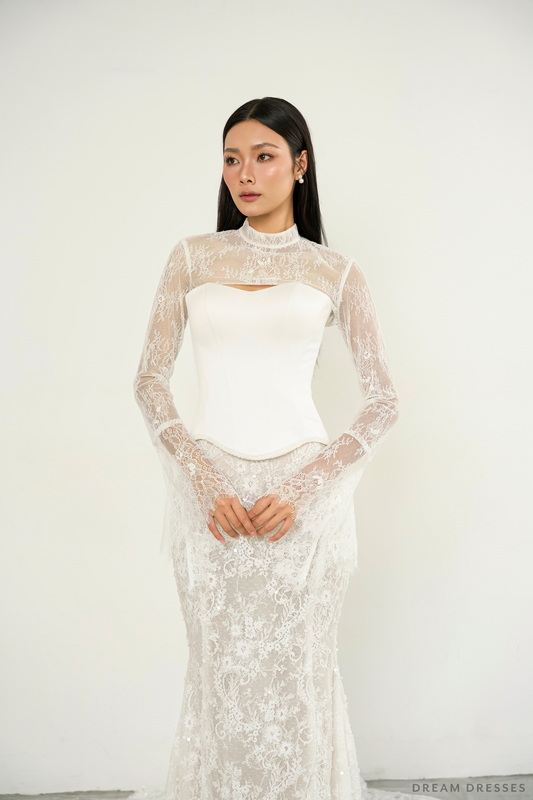
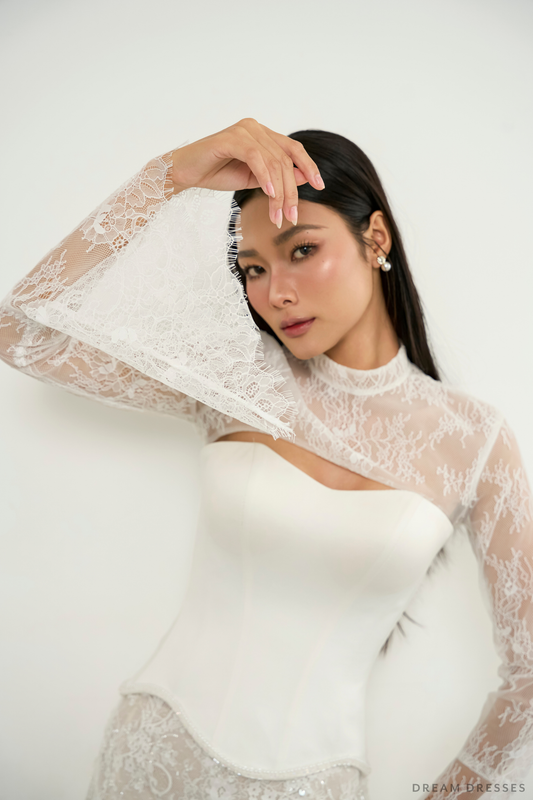
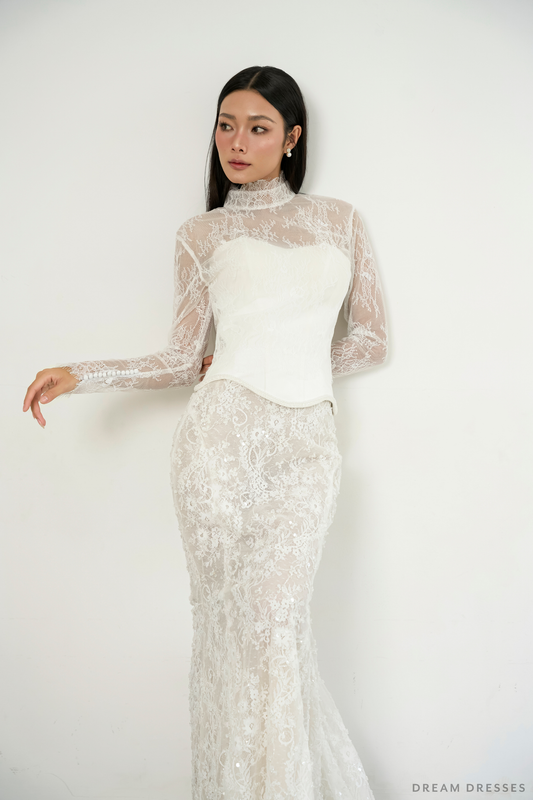
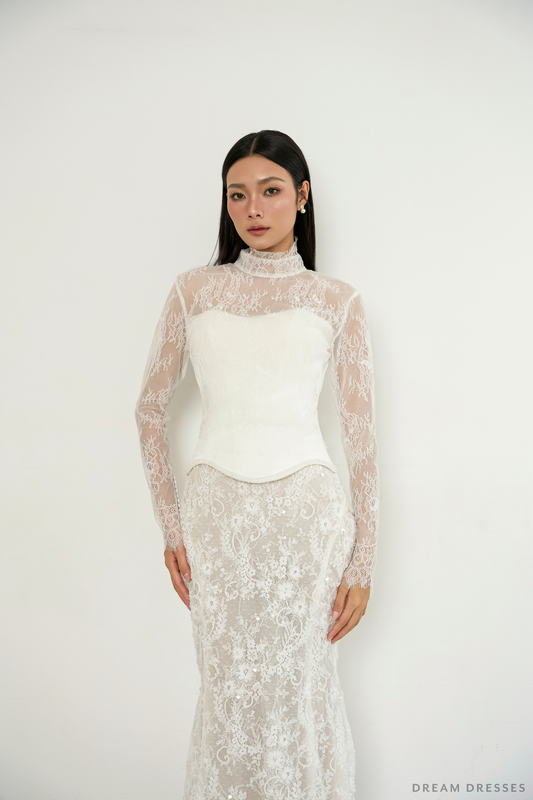
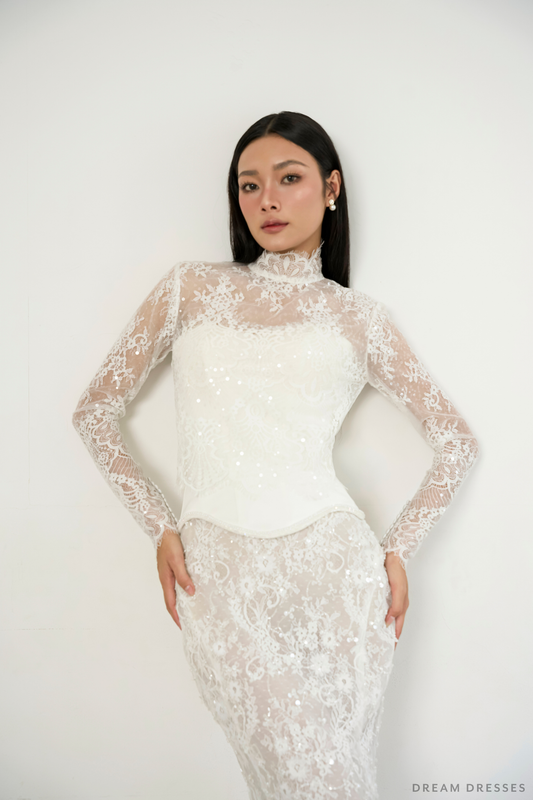
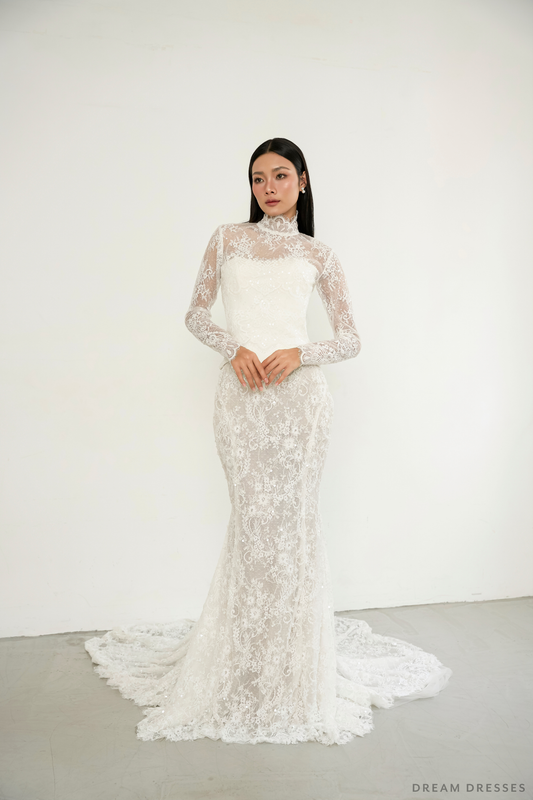
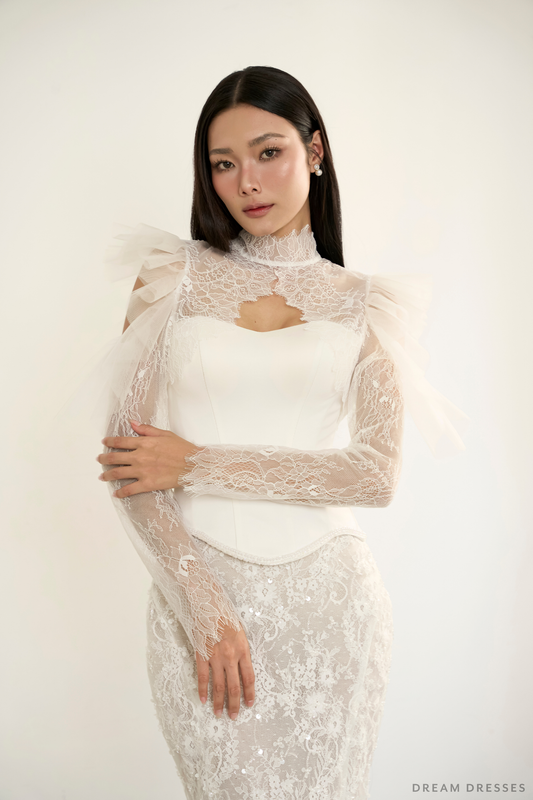
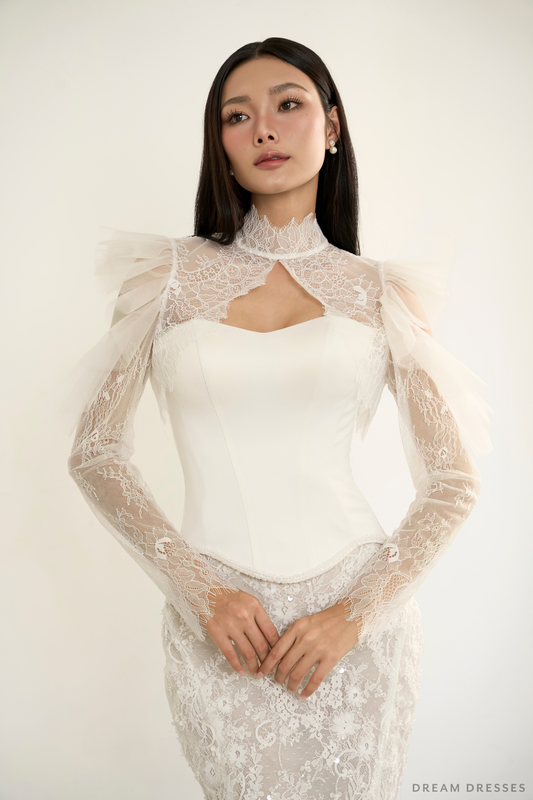
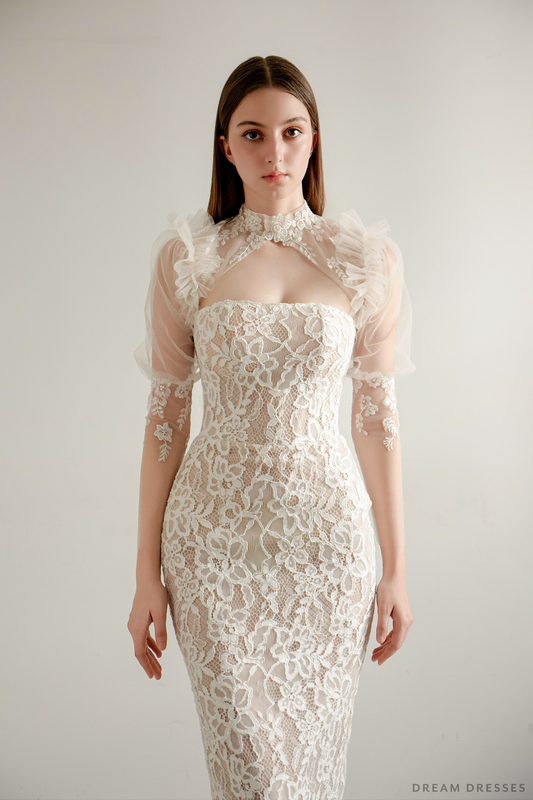
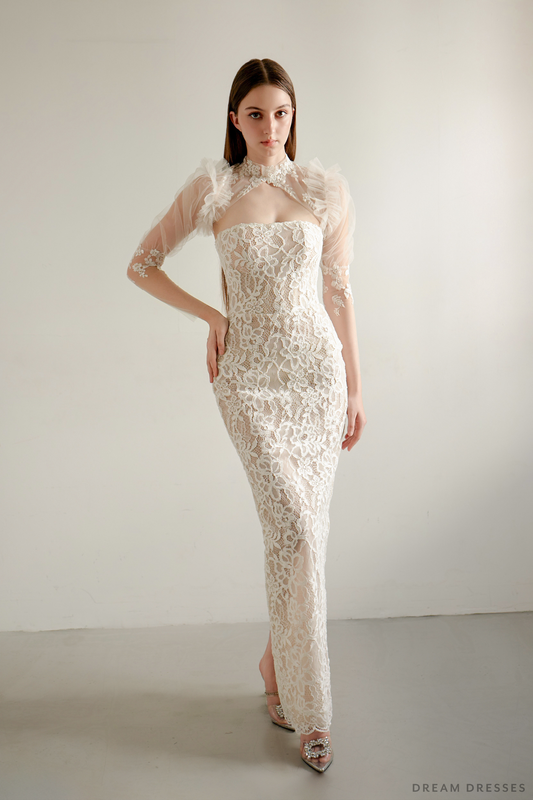
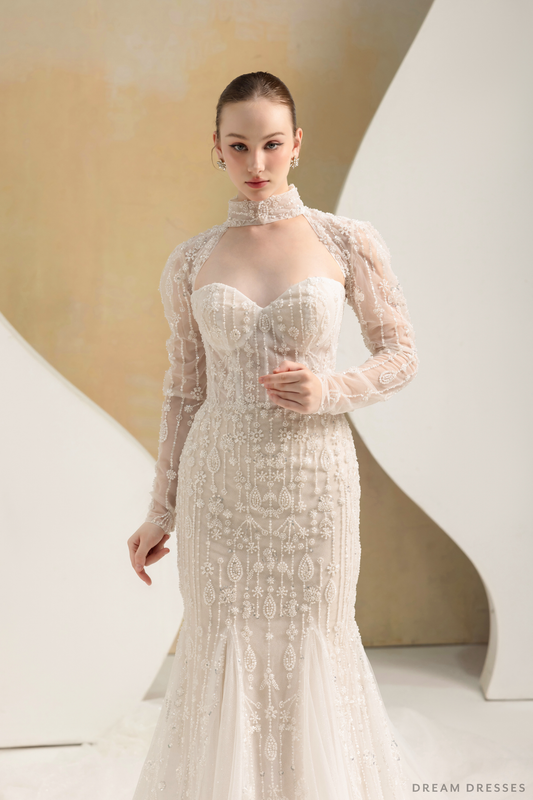
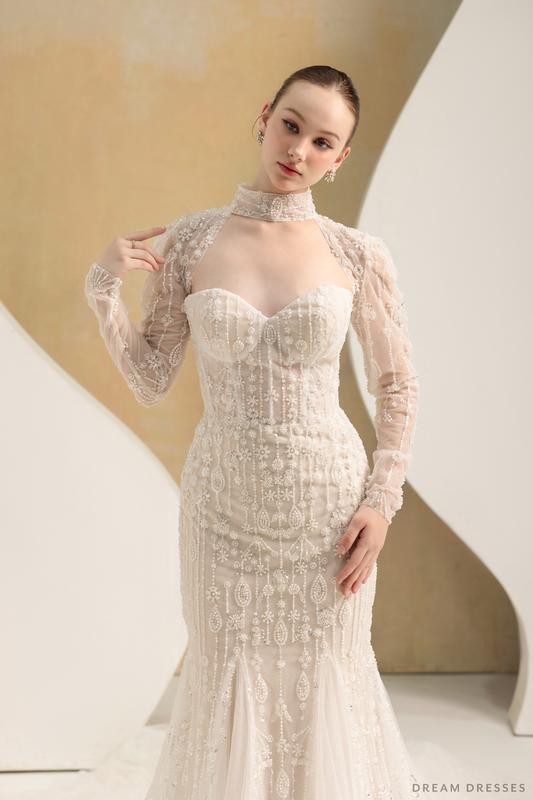
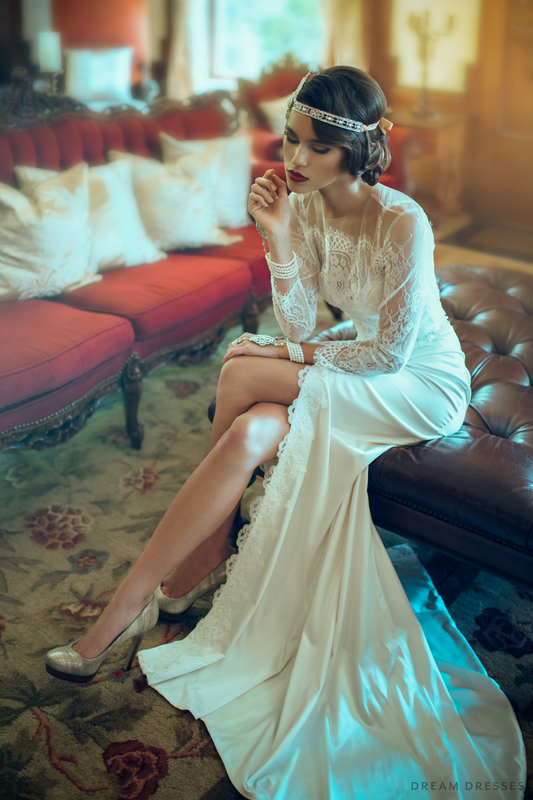
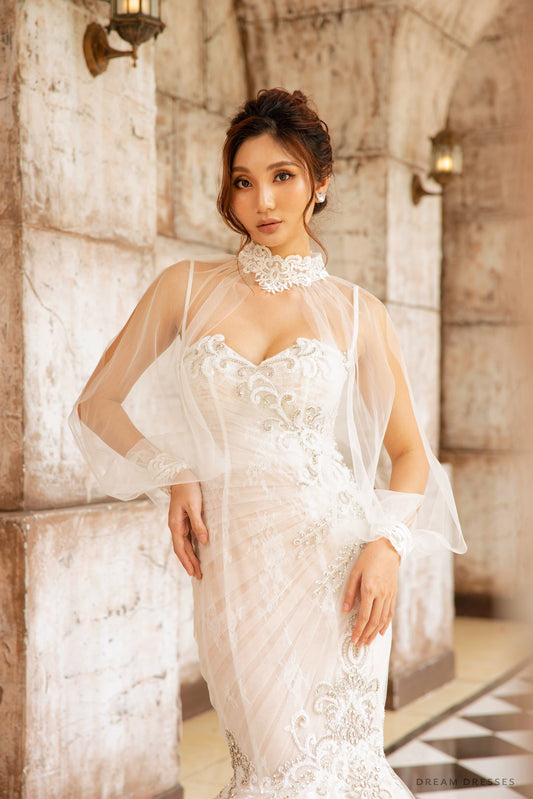
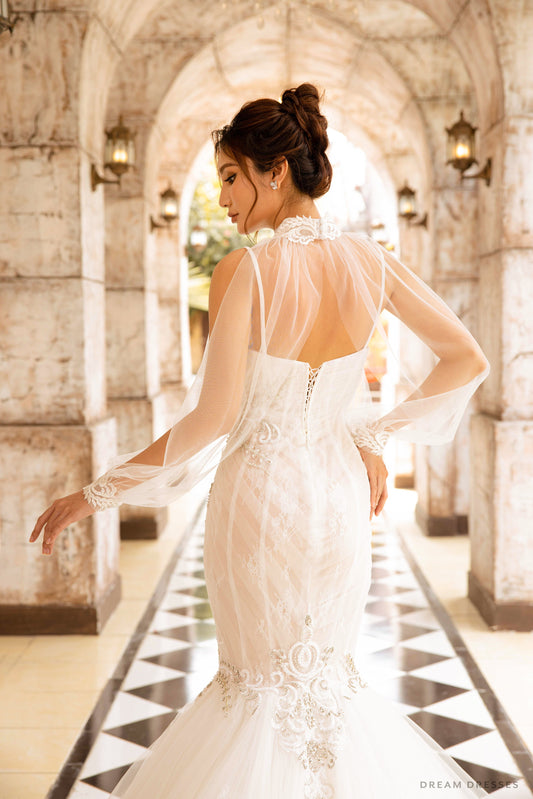
A bridal bolero adds a finishing layer to your gown, bringing a different balance of coverage, texture, and detail. Wedding toppers offer another way to reshape your bridal look without changing the dress beneath. Explore Dream Dresses styles to find a layer that complements your neckline, feels comfortable over your bodice, and suits your ceremony-to-reception plans.
Shop Bridal Bolero Styles and Wedding Toppers
Start with the detail you want to introduce: lace texture, a distinctive sleeve, or a different neckline. These bolero and topper designs offer several directions to explore, with individual product pages providing the next step for checking fit, construction, and available options.
Brenna Tulle and Lace Bridal Bolero: Explore a tulle-and-lace option when coordinating a layered finish with your gown.
Mila Bell Sleeve Lace Bridal Bolero: Consider a bell-sleeve silhouette when you want the sleeves to become a focal point.
Ophelia Chantilly Lace Bridal Dress Topper: Explore a Chantilly lace direction for a lace-led bridal look.
Lalisa Long Sleeves Wedding Dress Topper: Consider a long-sleeve option when planning coverage along the arms.
For other layering silhouettes, browse the wider selection of bridal cover ups.
How to Choose Wedding Toppers for Your Dress
Choose your layer around the gown you will actually wear, not just the accessory photographed on its own. The neckline, bodice structure, waist detail, and sleeve fit all influence whether the combination looks and feels right.
Compare the Shape and Coverage
Names can overlap between designs, so check the photographs and construction rather than relying on “bolero” or “topper” alone.
Bolero: Usually a cropped, jacket-like layer that frames the bodice. It may leave the front neckline exposed rather than providing complete coverage.
Topper: Often creates a more continuous upper-body layer and a new neckline. Its hem and seams need to sit comfortably over the dress.
Detachable sleeves: Add arm detail while leaving more of the original bodice visible. They do not necessarily cover the shoulders, chest, or back.
In short, choose a bolero to frame your gown, a topper to change its upper silhouette, or explore bridal sleeves and gloves when arm coverage is your main priority.
Check Sleeve Length and Opacity Separately
A long sleeve wedding topper can cover the arms while remaining sheer. Look at lace density, open areas, and lining information before deciding whether a style meets your ceremony preferences.
Short sleeves: Less arm coverage, with detail concentrated near the shoulders.
Elbow or three-quarter sleeves: Intermediate coverage that leaves the lower forearm or wrist visible.
Long sleeves: Coverage extending toward the wrist, without necessarily providing opacity or warmth.
In short, choose sleeve length for the area you want covered, then assess fabric construction for how much skin remains visible.
Fit the Layer Over Your Gown
Follow the individual sizing instructions and check any requested bust, shoulder, upper-arm, and sleeve measurements. A structured bodice changes how a layer sits, so fitting it over ordinary clothing may not reveal the full picture.
When trying it on with your gown, reach forward, sit down, and make a gentle hugging motion. Watch for pulling across the back, tightness at the upper arms, or a hem that rides upward.
Coordinate Color, Lace, and Hem Placement
Compare colors together in daylight where possible. Similar white or ivory labels do not guarantee matching undertones.
A lace bridal bolero does not need to repeat every motif on your gown. Consider the scale and density of both patterns: two competing lace designs can look busier than a deliberate contrast. Also check where the layer ends. A hem resting against raised waist embellishment may catch or bunch instead of lying smoothly.
Style Your Layer for the Ceremony and Reception
Decide which details of your dress should remain visible. A more open layer can frame a distinctive bodice, while a fuller topper can create a different neckline. Check the combination from the front, side, and back rather than judging it only in a mirror-facing pose.
Rehearse removing the layer before the wedding, particularly when wearing jewelry or a veil. Fastenings and lace should clear nearby embellishments without pulling. If you prefer a flowing silhouette rather than a closer-fitting upper layer, compare bridal capes as an alternative.
Why Buy Your Bridal Bolero at Dream Dresses
Dream Dresses brings bolero and topper designs into a bridal range that lets you explore different lace treatments and sleeve silhouettes alongside your gown choices. Compare the details that matter to your outfit, from the shape of the sleeves to how the layer frames your neckline. Before ordering, review the individual product information and contact Dream Dresses with questions about measurements, dress compatibility, or the details you need to confirm.
FAQ
These practical checks can help you narrow your choice before ordering a separate bridal layer.
What is the difference between a bridal bolero and a wedding dress topper?
A bolero is typically a cropped, jacket-like layer, while a topper often covers more of the bodice. Design names overlap, so compare the neckline, hem, and fastening details.
Can I wear a topper over a strapless wedding dress?
Often, yes. Check that the topper sits smoothly over the bodice and does not pull against its structure. Try both pieces together to assess neckline placement and movement.
Do long sleeve wedding toppers provide opaque coverage?
Not necessarily. Lace and tulle may remain sheer even with full-length sleeves. Check lining, lace density, and open areas rather than using sleeve length as a measure of opacity.
How should I choose the size of a bridal bolero?
Use the product’s sizing instructions and requested measurements. Assess the fit over your gown, paying particular attention to shoulder movement, upper-arm comfort, and whether the closures sit without strain.
Does the lace need to match my wedding dress exactly?
No. A deliberate contrast can work well. Compare motif scale, pattern density, and color undertone, then view the complete outfit to check that neither layer overwhelms the other.
Can I remove my bridal layer for the reception?
A separate layer can offer that flexibility, but removal depends on its construction and fastenings. Practice with your gown and accessories, and arrange help if closures are difficult to reach.
Related Blogs
Explore these related topics for more inspiration as you coordinate your gown and bridal layer.
Detachable Sleeves vs. Bridal Bolero is a relevant next read if you are deciding between an arm-focused accessory and a separate upper-body layer.
For broader styling inspiration, explore 4 Striking Bridal Cover-Ups That Elevate Your Bridal Look as you consider the overall silhouette you want to create.
Your Guide to Different Wedding Dress Necklines offers a related topic to explore when deciding how a layer should frame your gown’s neckline.